Joining SCO could help India get out of the current tight geopolitical spot - wedged between a wall of Pakistani hostility and fear of cooperating with China.
As the dust settles after the visit of Prime Minister Modi to China, it is time to take a calm and dispassionate look at where we stand in the context of Sino-Indian relations.
In today’s India, the narrow nationalism, if not paranoia, built on the burden of 1962 seems only artificial. But, can Modi and Xi move beyond this burden and change the bilateral discourse? Modi needs to be metaphysical not just pragmatic.
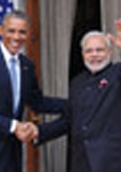
Modi and Xi share several similarities: their rise to the top, the popular nationalism they ride, the power they wield, and their domestic as well as foreign policy priorities.
For better operational cooperation, India and China need to go beyond rudimentary agreements on combating piracy and crime in the Western Indian Ocean. They need to work out an acceptable framework for functional collaboration and create positive momentum in favour of greater strategic interaction.
Will India and China resolve their boundary dispute during the tenure of Narendra Modi and Xi Jinping? The strategic communities in both countries are optimistic, particularly after the high tension prevailing along the border during President Xi Jinping’s tour of India in September 2014. Both Prime Minister Modi and President Xi are seen as decisive leaders.1 Both are expected to hold power in their respective countries for a few years to come. Personalities and personas matter greatly for scoring political brownie points. The boundary dispute, quintessentially, is political in nature.
Nepal shares an open border of 1,868 km with five Indian states (Uttarakhand, Uttar Pradesh, Bihar, West Bengal and Sikkim) and 1,415 km with Tibet. Under the 1950 Treaty of Peace and Friendship with India, Nepali citizens enjoy ‘national’ treatment and Nepali businesses unhindered rights of trade, transit and movement. An estimated six million Nepalese live and work in India and contribute to their inward remittances. Social intercourse along the Gangetic plane is described by people as ‘roti-beti ka sambandh’ (a relationship based on sharing of hearth and marriage).
The US will continue to do what it can for blocking rapprochement between India and China or Japan and China for it knows the danger of its loss of a dominant role in Asia. Despite all the distortions of time and space, the hard geographic reality of Asia will triumph just as it happened in Europe.
Prime Minister Modi’s visit to China must take place in extremely well prepared and ‘ripened’ circumstances, after there is clarity on China’s response on vital Indian strategic concerns.
The Maritime Silk Road (MSR) idea is part of this wider attempt by China to construct multiple lines of communication to its economic heartland in eastern China since the early 2000s. The underlying aim of such a geostrategy is to also develop inner Chinese provinces and shape China’s regional periphery by exercising economic, political and cultural Influence.