India needs to proactively buttress its broader position by affixing/prefixing the issue of Pakistan occupied Kashmir to the bilateral agenda every time the issue of Kashmir comes up for discussion.
Gilgit Baltistan’s absorption may signal a paradigmatic shift in Pakistan’s Kashmir strategy. However, Pakistan would have to reset the contours of its position on Kashmir including an implied acceptance of...
Chinese stakes in Gilgit Baltistan could propel Pakistan to introduce a stop gap provincial arrangement that would contain popular resistance, promote greater stability, and deflate India’s objections to CPEC.
The monograph attempts to present an exhaustive account on Gilgit Baltistan (part of the erstwhile princely state of Jammu and Kashmir and now part of Pakistan occupied Kashmir (PoK)) by...
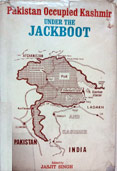
Publisher: Genesis Publications ISBN: 81-7020-680-4 Pakistan Occupied Kashmir (POK), which is the territory which Pakistan had acquired through aggression way back in 1947, remains as a no-man's-land which the world...
This article is an attempt to understand India's concerns over the Diamer Bhasha dam project within the overall ambit of India's approach towards Pakistan-occupied Kashmir (PoK). It makes a holistic...
The spate of killings has unleashed fear and uncertainty among the people and there is an open outcry about the government’s inaction and inability to control the situation.
Pakistan has failed to address the aspirations of the people under subjugation in PoK leading to frequent political outbursts as being witnessed now, outbursts that are only likely to grow...