The spirit of 'Connectivity', a salient motif in early-twenty first century international relations (IR), has provided an amenable context for a review of geo-determinism in IR theory and the defence...
China’s growing military presence in Central Asia through military exercises, trainings, extending arms assistance and building military infrastructure, has an impact not only on the region but also its neighbours,...
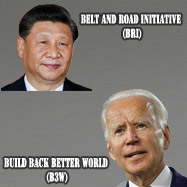
Envisioned as a sustainable alternative to China’s BRI, US-led Build Back Better World (B3W) initiative seeks to narrow down infrastructure deficit in the developing world. However, with their several distinct...
The drawbacks of over-reliance on China as a single manufacturing source has led to countries adopting “China Plus One” strategy to diversify supply networks. Whether Supply Chain Resilience Initiative by...
The article looks back on China’s proposal and promotion of the Belt and Road Initiative (BRI) to Vietnam, as well as Vietnam’s official position and response to this initiative. The...
While the ruling elite including army in Pakistan considers CPEC a boon, many analysts view it as a Chinese game-plan to turn Pakistan into a permanent colony, a rentier-cum-client state.