Armed Forces

India’s Special Forces: An Appraisal

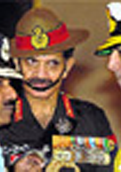
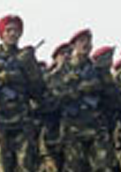
At a time when the battlefield has been progressively transforming from the conventional to unconventional, the role of Special Forces will become critical in shaping its outcome. Conflicts in the past decade have established the primacy of such forces. Their role has evolved and today special operations are meant to be decisive and achieve strategic objectives. The Indian security establishment has also been taking notice of these changes and by and large making right moves.

Enhancing Jointness in Indian Armed Forces: Case for Unified Commands

The nature of warfare has undergone a major change over the last few decades, brought about by rapid advancement in technologies combined with changes in doctrines and organisational concepts. This has resulted in enhanced focus on integrated and joint operations. Unified structures have been put in place by all major militaries in the world to optimise their defence capabilities. India appears to be reluctant to adapt wholeheartedly to the changing nature of war-fighting despite facing a wide variety of threats to its internal and external security.

Implications of India`s Services Voters

India has had a healthy tradition of the armed forces personnel being apolitical while being allowed to exercise their democratic right of voting in the electoral process. While the state police and central police and para-military units have been in the front tier of security network during the elections, the armed forces have discharged a crucial auxiliary-cum-supportive role.

Unshackling the Armed Forces: Need for Greater Delegation of Financial Powers

The recommendations of a committee set up in 2009 to review the delegated powers were accepted by the Defence Minister in December 2010 but soon thereafter these were held in abeyance because of the perceived fear that there was a large scale misuse of the delegated powers and that implementation of committee’s recommendations would result in excessive delegation of powers.

Directed Energy Weapons for the Indian Armed Forces

Military planners believe that the ‘blast and fragmentation’ type conventional weapons cannot advance much further technologically.The next chapter in weapons technology development is expected to be realized from Directed Energy weapons (DEWs). It can be assumed that by 2035, DEWs consisting of laser, microwave and millimeter waves can reach current performance levels of the existing kinetic energy weapons(KEWs) and conventional weapons. While these will co-exist with KEWs,a non-DEW option would have a debilitating effect on the defence preparedness of any nation.

Assessing Modernization of the Indian Armed Forces through Budgetary Allocations

India’s quest for modernization of the armed forces is propelled by the persistent threat to its territorial integrity and the aspiration of becoming a great power. However, there is no clearly defined comprehensive policy, much less a carefully crafted strategy, for time-bound modernization of the armed forces and there is no mechanism in place to steer the modernization programme in a holistic manner. In fact, there is considerable ambiguity about the core question as to what constitutes comprehensive ‘modernization’.