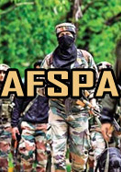
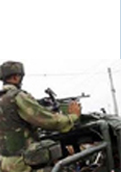
The debate and discussion about the AFSPA should attempt to find what led to the employment of the army in the first place. The answers might offer solutions to the...
The declaration of the Disturbed Area provision is fundamentally at odds with the mutually accommodative integration endeavour of the Nagas with the Indian Union as envisioned in the 2015 framework...
Application of AFSPA and DAA provisions to the eastern districts of Nagaland and to districts or select areas bordering Arunachal Pradesh and the Myanmar frontier would have sent an appropriate...
The Meghalaya High Court’s order directing the central government to consider invoking AFSPA in the Garo Hills is more like an advisory premised on a number of High Court and...
2013 witnessed the highest ceasefire violations in eight years, accompanied by a sharp increase in security force casualties. Some sections within the media and intelligentsia have misunderstood the army’s presence...
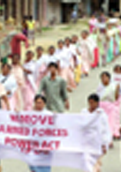
The debate over the Armed Forces (Special Powers) Act (AFSPA), has been raging within affected states, armed forces, central and state police organisations, human rights groups, legal fraternity and the...
The recent 'heart as a weapon' initiative in Jammu and Kashmir has been received favourably both by critics of security forces and by the state government.
The Indian Army’s Doctrine for Sub Conventional Operations does an admirable job in balancing human rights protection with operational demands. However, there is a degree of dissonance in the approach...