The recent French intervention in Mali comes almost after a year of turmoil in the country. Mali needs to achieve an internal political process which will strengthen the government’s mandate...
The recent wind of ‘popular uprisings’ blowing across North Africa, most notably Tunisia, Egypt, Morocco, Algeria and Libya, is monumental and unprecedented. Indeed, the world was taken aback by these...
The imbroglio over who should be chairperson of the African Union Commission has exposed deep divisions among African states, which will undermine the effective functioning of the commission itself.
At the Second India-Africa Forum Summit held in Addis Ababa, India’s relations with African countries have got a boost with the various cooperation initiatives unveiled by the Indian Prime Minister,...
India has embarked on a policy to balance its need for accessing strategic energy resources from the African continent with Africa's aspirations for greater skills and sustainable development. Sudan has...
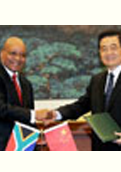
South African President Jacob Zuma has affirmed the mutually beneficial economic relationship between China and Africa, including with his country, notwithstanding the negative sides to this relationship. It is clear...
The entry into force of the Africa’s Nuclear Weapon Free Zone Treaty or the Treaty of Pelindaba in July 2009 and the first conference of parties on November 4, 2010…...
Focusing on specific sectors, beyond the options much in vogue with offensive emulationists or passive singularists, will help India to clarify its priorities, optimize its policy-making process and infuse its...
This paper seeks to understand the nature of cooperation between the UN and other IGOs in ongoing conflicts. It will examine the security framework in which these multilateral arrangements were...
AFRICOM is a new institution representing the new manner of US engagement. This is different from the EU model of engagement and comes at a time when India and China...