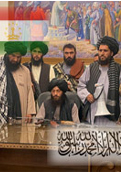
Geopolitical and geo-economic reasons account for the Central Asian nations, barring Tajikistan, following a multi-vector approach towards the Afghan Taliban regime.
Military capabilities matter. Countries and regions where wars have taken place have one important attribute- battle and operational experience. The monograph examines 21st century wars in Afghanistan, Iraq, Lebanon, Georgia...
Given the ideological convergence the Tehrik-i-Taliban Pakistan (TTP) has with the Taliban, the latter may not be able or willing to fulfil Pakistan’s demand that its activities be curbed.
While the international community has maintained a cautious stand vis-à-vis the Taliban, Tajikistan has decisively thrown its weight in support of the resistance movement against the Taliban and has made...
US–Pakistan relations have witnessed upheavals in the past; the US’ exit from Afghanistan is the latest in the series of inflection points in their relationship. However, irrespective of the escalatory...
The relationship between TTP, or Pakistani Taliban, and Afghan Taliban will continue to be dictated by religious-ideological convergence, ethnic-fraternal linkages and the close camaraderie that emerged while they were fighting...
India's emphasis on humanitarian crisis, concerns about possible misuse of Afghan territory by fringe elements, and silence on issues like how to deal with Taliban, and the prospect of India's...
Neither Russia and China nor the Central Asian countries have a clear strategy on how to handle the rapidly changing canvas in Afghanistan. An ambivalent waiting game tied by slow...