Pandemics and Power Narratives: The Rashomon Effect
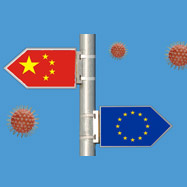
China has faced international condemnation and domestic unrest over its manipulation of information relating to the COVID-19 global pandemic.
- Shruti Pandalai |
- April 03, 2020 |
- Issue Brief
Home » Issue Brief
China has faced international condemnation and domestic unrest over its manipulation of information relating to the COVID-19 global pandemic.
Even after five decades of its entry-into-force, the Nuclear Non-Proliferation Treaty (NPT) is largely seen as a Cold War era instrument that has failed to fulfill the objective of creating a pathway towards a credible disarmament process.
While the third Bodo accord is a momentous development in the history of the Bodo conflict, caution must be exercised to ensure that it does not fall victim to the factional politics that undermined previous accords.
The adverse impact of lowering of colour service of soldiers below pensionable service will not only be felt at the structural and functional level but also the psychological level.
Considering that the defence capital expenditure already accounts for a very high share in the central government’s overall capital spend, any substantial hike in the former’s share looks less likely. This is more so given the government’s priority to spend on infrastructure and other non-defence capital assets to revive the economic growth.
The proposal to create an Air Defence Command is a bold move. Rather than resorting to less contentious issues to commence the integration process, the CDS has selected a very pertinent and significant operational issue. However, the way the proposed Air Defence Command is structured will be crucial as it will set the tone for further integration of all three services.
The existing approach to cyber security is heavily tilted towards practising deterrence by denial, essentially by building defences. However, the concept of deterrence needs further tweaking to make it workable in cyberspace.
Considering the wide expanse to be covered on both sides of the Indian Peninsula, and the possibility of concurrent operations on either side, it is imperative that India maintains an operational carrier battle group on both sides, and at all times.
Nuclear doctrines and postures are dynamic processes that evolve with the security environment. Twenty years after India’s nuclear doctrine was first drafted, the time is ripe for a comprehensive review and suitable revisions.
With the latest Union budget keeping the MoD interim allocation unchanged, the MoD has an uphill task in managing its resources and in funding its modernisation programmes.
While India is likely to meet the shortfall in its crude oil imports, the Trump administration’s sanctions on Iran have the potential to either seriously damage India’s ties with Iran or hinder the strategic partnership with the United States.
For the first time in the history of military aviation in India, helicopters have surpassed fighter aircraft in terms of sheer numbers. Are the Indian Armed Forces reorienting for helicopter dominated air operations?
A slight push in the right direction would be much more productive and efficient, such as treating telecommunications as a utility rather than a market, and building innovation and IPR ecosystems rather than incentivizing licensed production.
Rather than frittering away its limited leverage on issues such as refugees, settlements or borders, the international community should focus on borders as a means of resolving the Israeli-Palestinian conflict by posing a simple question to Israel: where do you begin, and where do you end?
The implications of a no-deal Brexit, particularly on EU-UK trade relations, security and the rights of the citizens, would be grave and irreparable.
The CAG report relating to the Indian Air Force has highlighted various anomalies and the unprofessional manner in which defence acquisitions are handled.
The eight per cent hike in the interim defence budget 2019-20 is bound to further intensify the resource problem of the MoD, which is already battling a massive shortage of funds.
As the East Asian regional order becomes fragmented, how is Prime Minister Shinzo Abe managing Tokyo’s strategic interests within the US-Japan-China relations?
China has managed to establish an edge in solar energy manufacturing and technology, and any shift in its solar policy is likely to affect countries looking to increase their solar energy capacity.
Voters in Bhutan have shown their political maturity by bringing in a new government, which is an indicator of growing awareness about their rights and their role in holding governments to account.