Prasanta Kumar Pradhan

img

Dr Prasanta Kumar Pradhan is a Research Fellow and Coordinator of the West Asia Centre at the Manohar Parrikar Institute for Defence Studies and Analyses (MP-IDSA), New Delhi. He holds a doctorate degree from the School of International Studies, Jawaharlal Nehru University, New Delhi. Since joining MP-IDSA in 2008, he has been researching on foreign policy, security and strategic issues in West Asia, and India’s relationship with West Asia and the wider Arab world. He is also working on the implications of Arab uprisings for the region and India.

Dr Pradhan is the author of the book Arab Spring and Sectarian Faultlines in West Asia: Bahrain, Yemen and Syria (Pentagon Press, New Delhi, 2017) and the monograph India’s Relationship with the Gulf Cooperation Council: Need to Look beyond Business (MP-IDSA, New Delhi, 2014). He is also the editor of the book Geopolitical Shifts in West Asia: Trends and Implications (Pentagon Press, New Delhi, 2016).

Dr Pradhan has published several research articles in reputed journals and has contributed chapters to several edited volumes on security and strategic issues in West Asia and India’s bilateral relations with the region. His current research project is titled “The GCC in Crisis: Implications for the Region and India”.


Research Fellow

Publication

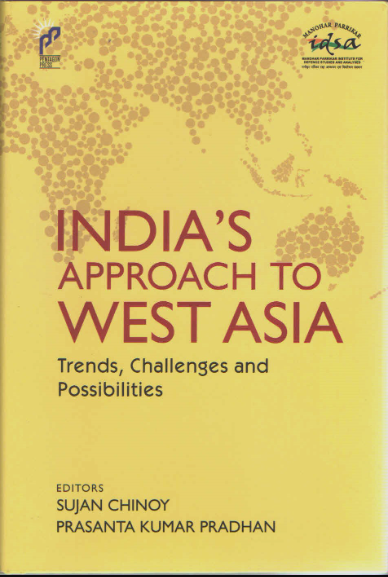
India`s Approach to West Asia: Trends, Challenges and Possibilities

  • Publisher: Pentagon Press
This volume provides perspectives of scholars from India and West Asia on several bilateral issues of concern, challenges and scope for further cooperation. The authors contend that a convergence of interests between India and West Asian countries across numerous domains, coupled with India`s escalating stakes in the region, and the growing recognition among West Asian nations of India`s burgeoning economic and political influence, stand as key drivers underpinning the India-West Asia relationship. Furthermore, they have underscored that under the leadership of Prime Minister Narendra Modi, India’s West Asia policy has undergone a major transformation.
  • ISBN: 9789390095971 ,
  • Price: ₹ 995/-
  • E-copy available

Four Decades of UNIFIL: Mandates, Contributions and Challenges

Established in 1978 with the objective of ensuring Israeli withdrawal from South Lebanon, the United Nations Interim Force in Lebanon (UNIFIL) has been a key factor in maintaining stability along the Blue Line between Israel and Lebanon since then. There are divergent views on the achievements of the mission after more than four decades of its deployment.

GCC at Crossroads: Challenges Amidst Unrest in the Arab World

The Arab unrest had a severe impact on the GCC, as it uncovered the existing internal fissures and limitations of the organization. Despite their success in integrating themselves on vital economic, security and political issues, divergent policies adopted by the individual member states on a number of regional issues in the aftermath of the Arab unrest was the main reason for the widening cracks within the organization.