Ashok K. Behuria

img

Dr. Ashok K.Behuria is a Fellow and Coordinator of the South Asia Centre at MP-IDSA. He is a Ph.D in International Relations from Jawaharlal Nehru University, New Delhi, India. He has worked on “India-Pakistan Relationship During the Eighties” for his Ph.D. He joined IDSA in 2003 and before that he worked as Assistant Director at the International Centre for Peace Studies, New Delhi. Dr.Behuria has also been Editor of International Studies, the prestigious research journal from Jawaharlal Nehru University, and has been in the Editorial Boards of Journal of Peace Studies and Strategic Analysis, the flagship journal from IDSA. He has taught at the University of Delhi and JamiaMilliaIslamia, New Delhi. He is a close observer of developments in South Asia and has been awarded the prestigious K Subrahmanyam Award for excellence in strategic studies for his work on Pakistan in 2009. He has published many research articles on strategic issues related to Pakistan, India-Pakistan relations, Sri Lanka, Nepal and South Asian security environment in Indian and foreign journals. He has edited several books on South Asia and continues with his research on internal politics in Pakistan, evolving strategic scenario in the Pak-Af region, radicalisation of religious discourse in the region, India’s engagement with the neighbourhood, regional security, and inter-state cooperation.


Senior Fellow

Publication

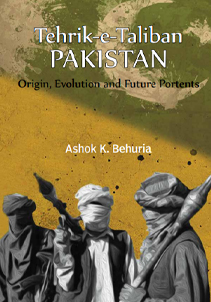
Tehrik-e-Taliban Pakistan: Origin, Evolution and Future Portents

  • Publisher: KW Publishers
This volume is a result of an abiding interest in the phenomenon of radical Islamist terror that haunts Pakistan today. The research questions that it seeks to answer are: Why do the tribal areas remain a problem for rulers and administrators throughout history? How and why did radical Islam embed itself in the terrain?

Was it influenced by the overall emphasis on Islam in Pakistani state politics? What is the role of history and politics in fuelling religious passions in the area? What has led to the survival of TTP despite humongous efforts of the Pakistan Army to decimate it? What are the future portents of such a movement? What impact is it likely to have on Pakistani society and politics?

The volume makes an attempt to understand the context in which Pakistani Taliban or TTP, as it is called now, came into being, the enabling factors that made the growth of TTP possible, the formation and growth of TTP as a militant organisation, its leadership and its activities over the years, its ideological orientation and its worldview, its aims and objectives, its relationship with other militant groups in and outside Pakistan and the efforts of the Pakistani establishment to come to terms with such a phenomenon. There is an attempt to analyse the process and study its implications for Pakistan and the region.

  • ISBN: 978-93-91490-02-7 ,
  • Price: ₹ 880/-
  • E-copy available

Did Pakistan Learn from its Bangladesh Experience?

This article seeks to re-analyse the pattern of Pakistani response to the demands from East Bengal as a federating unit with distinct linguistic
and regional identity, which led to eventual vivisection of Pakistan, and examine whether in the post-1971 years Pakistan learnt any lesson from
its Bangladesh experience and used it to deal with similar assertions at ethnic and regional levels.

The Politicization of Islam in Pakistan

Senior Fellow, Manohar Parrikar IDSA, Dr. Ashok K. Behuria’s article ‘The politicization of Islam in Pakistan’ has been published in the 2019-20 edition of the Pakistan Study Forum, brought out by College of Defence Management, Secunderabad. The inability of the elite to define Pakistani state in non-religious geo-cultural terms has allowed Islam to endure as the most important marker of the Pakistani identity, writes Dr. Behuria. Read Complete Article [+]

Pandemic-induced Regional Consensus can infuse new energy into SAARC

Senior Fellow, Manohar Parrikar IDSA, Dr. Ashok Behuria’s commentary ‘Pandemic-induced Regional Consensus can infuse new energy into SAARC’ has been published by the All India Radio (AIR) World Service, an external services division of AIR, on February 20, 2021.

India’s enthusiastic advocacy of regional cooperation and integration should be taken into account by leadership in neighbouring states and the SAARC should be made to realise its true potential, writes Dr. Behuria.

Read Complete Article [+]

Pak Admits To Its Role In Pulwama Attacks : Of Freudian Slips And Churnings In Pakistani Politics

Senior Fellow, Manohar Parrikar IDSA, Dr. Ashok Behuria’s commentary ‘Pak Admits To Its Role In Pulwama Attacks: Of Freudian Slips And Churnings In Pakistani Politics’ has been published by All India Radio (AIR) World Service, an external services division of AIR, on November 02, 2020.

The commentary analyses the political turmoil in Pakistan. The people of Pakistan have lost their confidence in Imran. If media discussions are any indicator, many anchors and commentators, earlier sympathizing with him, are now his most vocal critics. There is a view that Nawaz Sharif’s party will sweep the polls, if elections were to be held today in Punjab!

Read Complete Article [+]