North America & Strategic Technologies

About Centre

The Centre tracks relations between India and the countries of North America. US and Canadian internal developments are also monitored to have a better understanding of their role as drivers of foreign and domestic policies. The large Indian diaspora in these two countries also serves as a bridge for strengthening bilateral relations.

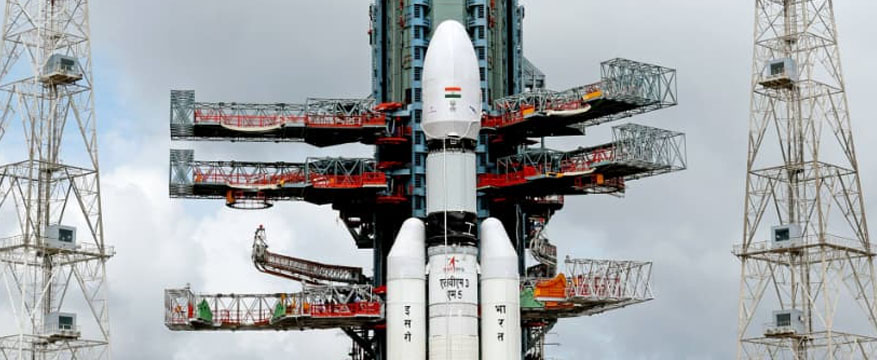
The Centre also actively tracks and analyses trends in strategic technologies, with principal focus on critical technologies and their implications for national security. It addresses evolving threats in space security and cyber security, ensuring comprehensive research into these critical domains. The other mandate of the Centre is to undertake research on Biological and Chemical Weapons with a focus on studying the dangers of proliferation and terrorism.

Members:

img
Rajiv Kumar Narang Senior Fellow
img
Cherian Samuel Research Fellow (SS)
Swati Arun Associate Fellow
Rohit Kumar Sharma Research Analyst
Meghna Pradhan Research Analyst
Khyati Singh Research Analyst
Vivek Reshi Research Analyst

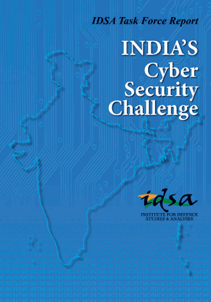
India’s Cyber Security Challenge

  • Publisher: Institute for Defence Studies and Analyses

This report argues that Government and the private sector give cyber security some priority in their security and risk management plans, and do this jointly. Being a report that is addressed to the security community in the widest sense and intended to stimulate public discussion, it relies on publicly available information.

  • ISBN 81-86019-98-7,
  • Price: ₹. 125/-
  • E-copy available
  • 2012

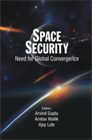
Space Security: Need for Global Convergence

  • Publisher: Pentagon Press

Employment of Space technologies for advancing the nation's social, scientific and economic interests is gaining increasing importance in the 21st century. At the same time Space security, which includes the security of Space assets and the ability to use Space for civilian and security purposes, is also attracting increasing attention. This book is an attempt to analyse the ongoing trends in the Space domain and emphasis the need for India to establish a comprehensive Space strategy.

  • ISBN 9788182746053

Decoding the International Code of Conduct for Outer Space Activities

  • Publisher: Pentagon Security International

Space technologies are critical to diverse human activities including communication, education, navigation, and remote sensing, meteorology disaster management and military. Naturally, keeping the space assets secure has become a major necessity for the states. Any damage to such assets would lead to excruciating consequences.

  • ISBN 978-81-8274-687-9,
  • Price: ₹. 695/-
  • E-copy available

Space Security: Need for a Proactive Approach

Report of the IDSA-Indian Pugwash Society Working Group on Space Security

  • Publisher: Academic Foundation
    2009

The objective of this report, prepared by a Working Group comprising leading experts in the field is to provide a multi-disciplinary analysis including the technological, legal, political, diplomatic, and security dimensions.

  • ISBN 9788171887620,
  • Price: ₹ 595/-

Space Security and Global Cooperation

  • Publisher: Academic Foundation

For the last five decades artificial satellites are being used to perform diverse roles in astronomy, atmospheric studies and education. They have been found useful for reconnaissance, meteorology, navigation, communication and search & rescue.

  • ISBN 13-978-81-7188-741-5,
  • Price: ₹ 695

The Corona Pandemic: An Imperative Holistic Readdressing of the Genuine Roots of the Virus

In an unprecedented move, a recently revamped leading White House website item unapologetically accuses China of being the provenance of the coronavirus pandemic, due to a lab leak of a labupgraded virus. A lasting, fickle melting pot involving internal, national, axial, and international elements, factors, and complex processes preceded it, reflecting a global system that lost vital credentials, perhaps irreversibly, corollary to unforeseen, colossal pandemic impacts.

CBRN Threat from Non-State Actors: A Historical Perspective

This article analyses the evolving threat of Chemical, Biological, Radiological, and Nuclear (CBRN) weapons from non-state actors, with implications for modern military strategy. It traces the historical use of biological agents from ancient warfare to Cold War programs. It highlights how advances in biotechnology have lowered the barriers for terrorist groups to acquire and deploy such weapons. Case studies, including the Rajneeshee attack and Islamic State's chemical operations, illustrate how CBRN tools are being adapted for asymmetric warfare. The article also critiques existing international treaties, noting gaps in enforcement and verification. With a focus on India's two-and-a-halffront security challenge from China and Pakistan, the study concludes with recommendations for strengthening military readiness, enhancing inter-agency coordination, investing in early warning and detection systems, and modernising doctrinal frameworks to counter emerging CBRN threats effectively.