Nepalese PM’s Visit to India: “Qualified Success”
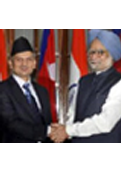
Prime Minister Bhattarai’s visit will definitely help in dispelling some of the mistrust between India and the Maoist regime in Nepal.
- Anshuman Behera
- November 04, 2011
South Asia is one of the main areas of research focus at MP-IDSA. The region has been going through a period of turmoil over the last few years. Definitive steps have been taken in the recent past towards the establishment of democratic governments in the region. Given the importance of developments in the region for Indian security, experts at MP-IDSA keenly watch and analyse unfolding developments in each South Asian country.
Two projects that are currently under progress are ‘Developments in Pakistan’ and ‘Pakistan Occupied Kashmir’. In addition, individual scholars are engaged in researching various security-related aspects pertaining to South Asian countries. The Centre has established bilateral institutional relations with leading think tanks in the region and proposes to undertake joint studies.
No posts of Books and Monograph.
No posts of Jounral.
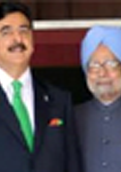
Prime Minister Bhattarai’s visit will definitely help in dispelling some of the mistrust between India and the Maoist regime in Nepal.
The visit gave an opportunity to both India and the Maoists to settle some of their misunderstandings. However, it could be a huge risk for India to engage him more at the individual level than at the party level.
Bhattarai’s visit was historic not for the bilateral issues that were discussed but because it provided an opportunity for meaningful re-engagement between India and the UCPN(M).
The people-to-people connectivity has the potential to actually transform the relationship between India and Bangladesh and take it to a higher level of cooperation and understanding.
If India is able to sustain a comprehensive partnership with Afghanistan in trying circumstances, it would serve as a model for managing its relationships with other neighbours.
With hydel cooperation emerging as an important pillar in India-Bhutan relationship, this Issue Brief examines the challenges and opportunities in this sector in the years to come.
Since the infliction of unacceptable damage may not deter Pakistan from breaking the nuclear taboo, a ‘tit for tat’ strategy in case of lower order nuclear use is worth considering.
Until the US figures out an answer to the larger Pakistan problem, like India it too will have to resist the temptation of responding to Pakistani provocation with force.
While the institutional reforms and structures are in place, often their effectiveness is impeded by corrupt practices and lack of proper maintenance and implementation on ground.
Left behind will be a quasi-theocratic Afghan state compelled to accommodate Talibani-style cultural medievalism and a Pakistani state teetering on the brink of political self-destruction and social chaos.