Nuclear science and technology have impinged upon global politics and security studies for decades. MP-IDSA has focused on the study of the political and strategic facets of nuclear science and technology since its inception and is known for providing a different perspective on global nuclear issues. The Institute has been at the forefront of shaping the debate on key nuclear issues in India and in the world at large. The Centre for Nuclear and Arms Control is dedicated to advance research on strategic nuclear issues. It is engaged in projects that seek to provide answers to relevant policy questions relating to global nuclear disarmament, non-proliferation and anti-proliferation, nuclear energy, global nuclear governance, regional nuclear dynamics, Arms Trade Treaty, the Chemical and Biological Weapons Conventions, among others. Through its outreach activities, the Centre has disseminated its research output in the strategic studies and policy communities.
Prime Minister Gillard's decision to reverse the uranium export policy not just indicates a dramatic shift in Australia’s strategic outlook, but also could endow a decisive fillip to its crisis-hit uranium industry.
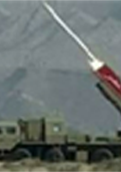
India is currently in the midst of a battery of scheduled missile tests at its Chandipur test range off the coast of Orissa, including scheduled tests of the Prithvi-II and Agni-II. On Saturday, India tested, for the third time, a 750-km semi-ballistic missile named Shourya. The Shourya has roughly the same range as the Agni-I but is designed to be more mobile, with a reduced logistics trail.
It makes little sense whether a strategic or tactical nuclear weapon is used by Pakistan, since India’s general response would be to carry out a punitive attack on the adversary.
Even the otherwise vague 2011 NSG public statement which inserted the NPT angle into the guidelines underlined that the NSG would implement the India-specific exemptions fully.
An anti-nuclear movement in India would remain largely a marginal movement with sporadic spurts depending on the issue at hand, the site in question and the political parties involved.
Though Global Zero’s ‘umbrella activism’ involving current and past policy practitioners and the general public alike can be expected to gain further momentum in the near future, its continued vitality may however be captive to the pressures of the timeline within which its vision is intended to be achieved.
Under the November 2010 statement issued by India and the United States, India is committed to take only one step: harmonizing its export controls with those of all the four multilateral export controls regimes.
This Brief elaborates the principles that need to be followed to evolve a criteria-based approach to enable India to join the NSG as a full member and contribute materially and substantially to a future non-proliferation regime that will be acceptable to the international community as a whole.