Military Affairs

About Centre

The Centre for Military Affairs comprises of a mix of serving officers of the Indian Armed Forces and civilian experts. The Centre adopts an inter-disciplinary approach to various issues that impinge upon India’s national security in general and the armed forces in particular. Its research focus is on issues that impact upon national security and capacity-building of the Indian armed forces. Specific areas of focus include: emerging contemporary challenges in warfare, jointness, defence co-operation, maritime security, and military training needs. In addition, the Centre also addresses China- and Pakistan-related issues with a bearing on their interface with Indian security. The Centre closely interacts with military establishments in India and abroad and contributes to policy making by conducting research in areas of significance for the armed forces.

Members:

Vivek Chadha Senior Fellow
Manish Sharma Senior Fellow
Gaurav Selopal Research Fellow
Anamika Choudhary Research Fellow
Karan Vasishth Research Fellow
Rahul Singh Research Fellow
R. Vignesh Associate Fellow
Namita Barthwal Research Analyst
Siddhant Hira Research Analyst

Revenue Procurement Practices in the Indian Army

This monograph examines some aspects of the Indian Army’s revenue procurement practices. It discusses the peculiarities of these practices in the Indian defence and security setup, relating it to the contemporary risk scenario. This study draws attention to the corresponding trends in the private or commercial sector.

Stealth Technology and its Effect on Aerial Warfare

In aerial warfare technology has progressed rapidly from the frail and flimsy machines seen in the air in the first half of the twentieth century. This monograph attempts to commence task of explaining stealth technology, looking at possible counters to stealth and discussing the ways in which stealth technology changes the conduct of aerial warfare.

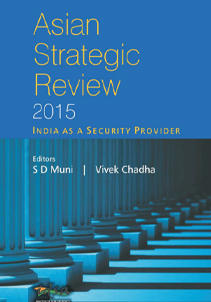
Asian Strategic Review 2015: India as a Security Provider

  • Publisher: Pentagon Press

India’s role as a security provider has increasingly been discussed and debated over a period of time. This has received a fillip as a result of India's growing capabilities, both economic and military. The 2015 edition of the Asian Strategic Review, is possibly the first book which analyses this facet in the Asian context. The book assesses India's capabilities as well as existing limitations. It contextualizes India's role in relation to important regions. Multinational fora and specific countries in Asia. The publication aims to provide greater clarity on the past, present and future contours of India's role as a security provider, in light of evolving strategic contours and its security implications.

  • ISBN 978-81-8274-825-5,
  • Price: ₹ 995/-
  • E-copy available

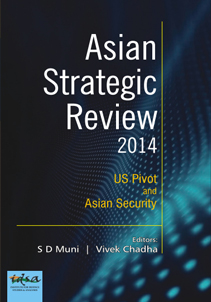
Asian Strategic Review 2014: US Pivot and Asian Security

  • Publisher: Pentagon Press

The “Pivot to Asia” strategy qualifies to be called Obama Doctrine: a part of Obama’s “grand strategy”. This policy may radically redefine not only the US engagement with Asia but also the Asian strategic dynamics. This book looks at various facets of the pivot strategy, to include US, Chinese, regional and country specific perspectives with an aim of providing greater clarity and understanding.

  • ISBN 978-81-8274-769-2,
  • Price: ₹ 995/-
  • E-copy available

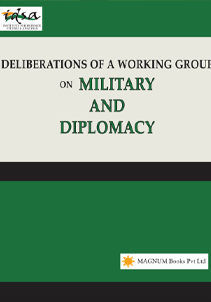
Deliberations of a Working Group on Military and Diplomacy

  • Publisher: Magnum Books Pvt Ltd

The Indian defence establishment is confronted today with what is probably its greatest challenge since Independence. Besides being prepared to wage conventional war on possibly two fronts simultaneously, our Armed Forces need to be geared to undertake this under a nuclear overhang and within a technological environment that encompasses cyber- and space-based threats. There is therefore an imperative requirement for change that would enable us to adapt to the emerging situation. The archaic organisations and processes put in place on achieving Independence must undergo radical overhaul.

  • ISBN ISBN 978-93-82512-01-1,
  • Price: ₹. 195/-
  • E-copy available

Theaterised Joint Logistics: A Caliberated Initiation

The most successful and efficient methodology being adopted by modern militaries is a logistics system based on theatre or theaterised logistics. In our case, there has hardly been any serious attempt to modify the logistics system which we inherited from the British. The monograph presents short term approach and a medium approach to bring in desired changes in our military logistics system after evaluating the need of the hour.

Operational Lessons of the Wars of 21st Century

Military capabilities matter. Countries and regions where wars have taken place have one important attribute- battle and operational experience. The monograph examines 21st century wars in Afghanistan, Iraq, Lebanon, Georgia and Libya. New trend of cyber war is also included. Key highlights have been extracted and distilled into lessons to be learnt.

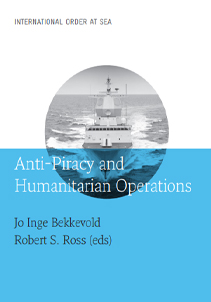
International Order at Sea: Anti-Piracy and Humanitarian Operations

  • Publisher: Norwegian Institute for Defence Studies

International Order at Sea is a workshop series chaired by the Norwegian Institute for Defence Studies (IFS) in partnership with the Institute for Defence Studies and Analyses (IDSA), New Delhi; China Foundation for International and Strategic Studies (CFISS) and China Institute for Marine Affairs (CIMA), Beijing; and the Center for Naval Analyses (CNA), Alexandria, VA.

The workshop series examines seapower and the future of the global commons. It explores how international order at sea is established, maintained, changed and challenged, and it focuses on the interaction and cooperation among leading, emerging and smaller naval powers to maintain order at sea

  • ISBN 978-82-91571-15-7,
  • E-copy available

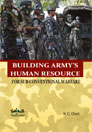
Building Army’s Human Resource for Sub-conventional Warfare

  • Publisher: Pentagon Security International

This book portrays how the peculiarities of subconventional warfare impact the soldiers and what needs to be done to address the ill effects by various agencies at macro as well as micro level. Specifically, it brings out the methodology to sustain motivation of troops in this special warfare and suggests measures to optimise their stress levels. Through this book, the author has brought out various issues which cause extraordinary stress among army personnel operating in sub-conventional warfare environment.

  • ISBN 9788182746039,
  • Price: ₹. 695/-

A Neo-Nixon Doctrine for the Indian Ocean: Helping States Help Themselves

In recent years the Indian Ocean has received significant attention from the defence-intellectual community in the United States. However, the actual strategic importance of the region to US interests is less clear. In an environment of fiscal austerity, if commitments abroad are not firmly linked to interests, any significant involvement in a region of secondary concern could contribute to ‘imperial overstretch’.

India’s Maritime Core Interests

While the maritime doctrine was published by the Indian navy in 2004 and improved upon in 2007, the core interests identified were as seen through the prism of the navy. The national maritime interests of India are distinctly different from the ones identified by the Indian navy and need to be analysed to understand the nuances and the dimensions of such interests so as to promote India's maritime power potential.

Maritime Developments in the South Western Indian Ocean and the Potential for India’s Engagement with the Region

The Indian Ocean region, being a vast geographical entity, is composed of various regional and sub-regional entities. This article addresses prominent maritime developments in the South Western Indian Ocean (SWIO) region of the Indian Ocean Rim and highlights the multi-dimensional growth of strategic maritime activities in the region.

A Founding Era for Combined Maritime Security?

In a nutshell the article posits that American naval power, and thus the United States' ability to police the seas, will continue to decline, and that Washington is attempting to compensate by fashioning a new paradigm of multinational maritime security. With no likely candidate for a global navy in the offing the challenge is to create one or more multinational guarantors of free navigation. I attempt to gaze into the future, discerning the likely dynamics of this coalition-building project.

Role of Force in Statecraft: Declining Utility or Inescapable Necessity

Recent debates amongst the strategic community on the utility of force in statecraft have thrown up interesting perspectives that have seldom been debated in India. While great power rivalries, inter-state conflicts and coalition conflicts still remain distinct possibilities in the future, major principles of war fighting, conflict resolution, statecraft and nuclear deterrence have since been turned on their head when confronted by non-state actors and non-traditional threats.

Towards a Proactive Military Strategy: ‘Cold Start and Stop’

The article reviews the Cold Start doctrine in light of the limited war doctrine. It argues that the launch of strike corps entails a risk prone war expansion. War termination should therefore be short of the launch of strike corps offensives. It suggests a 'Cold Start and Stop' strategy with limited offensives by integrated battle groups being used to coerce Pakistan. Pakistani amenability to Indian war aims would be dependent on India offering incentives diplomatically alongside. India's limited war doctrine, currently not articulated, must be informed by such a war waging strategy.

A More Centralised State after War

The government headed by President Mahinda Rajapaksa would easily be deemed the most decisive one in post-independence Sri Lanka. What the government leadership decides is implemented forthwith. The military crushing of the Liberation Tigers of Tamil Eelam (LTTE) that had eluded five successive governments is the most outstanding example. Nothing could stand in the way of the government's decision, neither the fear of failure nor of foreign pressure.

Strategies to Tackle Fourth Generation Warfare (4GW): An Aerial Perspective

The changing nature of warfare, as the twentieth century drew to a close, saw the increased proliferation of conflict between non-state actors and the state. Small wars, wars of liberation, insurgencies, terrorism, proxy wars, sub-conventional warfare and a host of other terminologies emerged that attempted to fingerprint this genre of low spectrum warfare. Initially, it was felt that it was risky to use air power in this kind of warfare and that surface forces were best equipped to fight these wars with only superficial support from air forces.

Signals and Orchestration: India’s Use of Compellence in the 2001–02 Crisis

How effective was the Indian government in sending clear, coercive signals and orchestrating them into coherent messages during 'Operation Parakram' in 2001-02? This study finds that compellence was hampered by three factors: (1) the government kept changing its demands; (2) the lack of adequate civil-military coordination; and (3) the government engaged in a dual-track policy of direct coercion of Pakistan, while simultaneously engaging the United States to put pressure on Pakistan. Ultimately, these two policy strands worked at cross-purposes to each other.