

Europe and Eurasia

About Centre

MP-IDSA’s Europe and Eurasia Centre conducts its research both topically and regionally, focusing on the key strategic importance of Europe and the Eurasian region – covering Russia and the former Soviet Republics – to India’s security and foreign policy. While the European continent itself is no longer a major source of threats to India, European involvement and outreach in the global and regional arenas demand active attention to the security and defence policies of European countries and the efforts of major multilateral institutions such as NATO and EU. The Centre continues to host visiting European policy makers, academics, military personnel, diplomats and political leaders for conferences, seminars, lectures, workshops, and informal briefings.

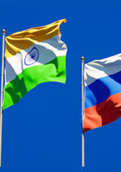
In addition, the Centre focuses on the security and foreign policies of Russia as well as of the post-Soviet republics. India continues to depend on Russian defence supplies and benefits from Russian cooperation in the fields of hydrocarbon and nuclear energy. In the past, India and the erstwhile Soviet Union had invested heavily in a strategic relationship. That continues to be an important goal in official pronouncements. Russia is still politically, diplomatically and militarily important for India.

The Centre has published several books, reports, articles and policy papers on a wide variety of issues in the region. It has been conducting a series of security dialogues with the countries of the region at the bilateral and multilateral levels. The Centre also focuses on security and strategic issues in Central Asia that impact India. Attention is also directed towards the energy security and economic linkages between India and Central Asian States.

Members:

img
Rajorshi Roy Research Fellow
Kripa Jayaprakash Research Analyst
Nadia Faruque Research Analyst

No posts of Books and Monograph.

BRICS in the Post-Liberal World Order: A New Agenda for Cooperation? Perspectives from South Africa

Given complexities currently underpinning multipolar realities of the international system, it seems that a pluralist internationalism is becoming a strategic consideration for a post-Western world order. This warrants new agendas for cooperation. Based on the latter this analysis examines to what extent the BRICS can articulate such a new agenda based on a South African-informed perspective. This involves exploring the basis of a BRICS-African agenda competing with the geo-political interests of sub-groupings such as the SCO, RIC, and the EAEU.

Washington’s ‘America First’ Global Strategy and Its Implications for the BRICS

The article explores America’s evolving policy towards BRICS in the context of the Trump administration’s new ‘America First’ global strategy. Even though the BRICS grouping has not become an anti-systemic or anti-liberal force, its attempts to form an alternative centre of global power has prompted the US to manage multipolarity. The Trump administration has continued America’s previous policies of hedging potential BRICS consolidation and enhancing its regional engagement in the era of sovereignty revivalism and deglobalisation.

Putin’s Political Regime and Its Alternatives

The article analyses the current Russian regime and its possible alternatives, both nationalist and pro-Western, from the viewpoint of various theoretical approaches. It argues that applying the criteria and terminology of political science, which are usually used in studies of modern Western societies, to define contemporary Russia’s social and economic system is just as pointless as describing its political system in terms of the modern Western political system.

Brexit: Harbinger of an Unexpected New World Order

The stunning British vote of June 24, 2016, to quit the European Union (EU)—dubbed Brexit—has triggered a major realignment of economic and political forces across the globe, strengthening the template of a new world order tilted towards Moscow, Beijing and the rising powers of Asia and Africa. As Washington nervously recognizes, there will be a decline in the influence of the US, EU and North Atlantic Treaty Organization (NATO), the latter two having served as instruments of US global domination.

The Dalai Lama and Tibet’s Future

In an ominous way the Dalai Lama recently threatened to terminate the over 400-year-old spiritual lineage of his position, saying that Tibetans no longer require the authority of the Dalai Lama and it would be a shame if a ‘weak’ person succeeded him.

In 2011, he also gave up his political authority in favour of an elected leader among Tibetans living in exile. Seemingly, the motive for these measures was to forestall any alternative plan by Beijing to appoint a successor after him and challenge the authority of such an appointment if Beijing does so.

Guest Editor’s Introduction

At the turn of the 21st century, the world entered a new period of development. The customary bipolar system that prevailed after World War II had collapsed following the self-destruction of one of its poles. Russia’s refusal to follow the Western course is only the first poignant sign of confrontation between the West’s united world project and the emerging multipolar world.

Russia and China in the Arctic: A Team of Rivals

The Arctic is beginning to test the stage-managed optics of China and Russia’s ‘strategic partnership’. Friction was most recently on display after the Arctic Council’s May 2013 decision to confer permanent observer status on Beijing. The Chinese media celebrated the move as an affirmation of the nation’s ‘legitimate rights’ in Arctic affairs.1 Russian officials were much less enthusiastic.

Kazakhstan: Continuous Improvement or Stalemate in its Relations with China?

Over the last two decades Kazakhstan has implemented foreign policies aimed at improving relations with many new geopolitical actors, as well as longstanding common partners such as Russia, on which it was formerly heavily dependent. By utilising its huge hydrocarbon production potential, Kazakhstan has managed to surpass all other Central Asian states in political and economic importance. Kazakhstan has now turned its eyes to China, seeing it as an important and powerful partner in the economic, political and security spheres.

Australia’s Defence White Paper 2013: Seeking a Fine Balance

On 3 May 2013, Australia’s former Prime Minister Julia Gillard released the Defence White Paper (DWP) 2013, making it the sixth White Paper on defence in the history of Australia, and the third since 2000. The last Defence White Paper, entitled Defending Australia in the Asia Pacific Century: Force 2030, was released in 2009 when Prime Minister Kevin Rudd was serving his first term.