East Asia

About Centre

The East Asia Centre is dedicated to studying the domestic and foreign policies of the region as well as India’s multifaceted relationships with the major countries of this region. With respect to China, the Centre’s research foci are its foreign policy, domestic politics, economy, military affairs, and India’s relations with China in all its dimensions. It monitors developments in China’s autonomous and special administrative regions. The Centre also focuses on Taiwan with reference to cross-Strait relations, ties with the US, India-Taiwan relations and domestic politics. The Centre researches Japanese and Korean affairs. Its major research focus is on their domestic politics, foreign policy and comprehensive bilateral relationships with India. It follows the developments in the Korean peninsula and inter-Korean relations. The geopolitics of the Indo-Pacific is studied at the Centre too.
 

The Centre brings out five monthly newsletters: East Asia Military Monitor, Japan Digest, China Science and Technology, Korea Newsletter, and China Military Digest.

Members:

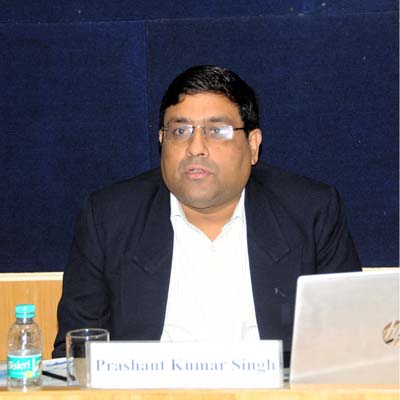
Prashant Kumar Singh Research Fellow
img
M.S. Prathibha Associate Fellow
Abhishek Kumar Darbey Associate Fellow
Ranjit Kumar Dhawan Associate Fellow
Mayuri Banerjee Associate Fellow
Arnab Dasgupta Associate Fellow

No posts of Books and Monograph.

No posts of Jounral.

Hu’s Visit to Japan

Sino-Japanese relations were in the doldrums for the past decade because of the repeated visits to the Yasukuni Shrine by former Japanese Prime Minister Junichiro Koizumi. One consequence was a complete freeze in mutual visits at the highest political levels between 2001 and 2006. Even exchanges at other levels were affected. The ice was broken in 2006 when Japanese Prime Minster Shinzo Abe visited China, and the ice began to thaw when Chinese Premier Wen Jiabao visited Japan in 2007.

Taiwan Elections Vindicate the Status Quo

The KMT’s victory in the March 2008 presidential elections can be essentially attributed to the promises it made to improve economic ties with Mainland China and assure good governance. Ironically, these were partly the same promises that had brought the DPP (Democratic Progressive Party) to power in the historic 2000 presidential election. There was no element of surprise to the election results in which Ma Ying-Jeou defeated his DPP counterpart Frank Hsieh. The KMT’s victory does not mean that Taiwan will begin supporting unification with the Mainland.

Musharraf in China: Economic benefits of an “all weather friendship”

Pakistan President Pervez Musharraf’s recent visit to China from April 10-16 revealed the depth and confidence that highlight Pakistan-China relations. The much repeated refrain of an “all-weather friendship” between the two countries is now transforming itself from the erstwhile “purely defensive and strategic” in nature to one of deep economic engagement.

Ma, KMT and the new Cross-strait Policy

In a development that is expected to ease tensions across the Taiwan Strait, Taiwanese voted in favour of the Kuomintang (KMT, Nationalist Party) candidate Ma Ying-jeou in the March 22 presidential election. Ma’s victory was unprecedented, as he captured 58 per cent of the total votes cast – a full 16 percentage points more than Frank Hsieh of the Democratic Progressive Party (DPP).

India Should Revisit its Tibet Policy

The Indian government’s response to the ongoing protests in Tibet has been to merely state its “distress” about the situation and reaffirm its position that Tibet is an “internal” affair of China. New Delhi has assured Beijing that its position on the Tibet issue is “clear and consistent” and that this “would not change in the future.” The Indian position is based on its traditional opposition to separatist movements and to foreign intervention in support of such movements.

The Sealed Fate of the Tibetan Unrest

Ongoing protests in Tibet, coinciding with the commemoration of the 49th anniversary of the 1959 March Uprising, was not unexpected given that China is only a few months away from the Beijing Olympics. The hosting of the Olympics is looked upon as China’s formal arrival as a great power and as an event that heralds its potential emergence as a superpower in the years to come. Consequently, the Chinese government has been well prepared to confront any untoward developments that could tarnish its image as a responsible global power.

Protests in Tibet

Tibet has been an important and controversial issue for the Chinese Communist Party (CCP) since it came to power in 1949. The CCP “liberated” Tibet in 1950 and began its official rule in 1951. There have been two previous uprisings in Tibet, in 1959 and 1989. The latest protests have brought to the forefront the fact that all is not well in Tibet as claimed by the CCP. The policy followed by the CCP has been to increase the number of Han Chinese in Tibet, and thus more fully amalgamate the region into the mainland. All top and important official positions in Tibet are held by Han Chinese.