UNSC Resolution 2321 and the DPRK?
In a strong response to the nuclear warhead test of Pyongyang on September 9, 2016, the United Nations Security Council (UNSC) at its 7821st meeting, held on November 30, 2016, adopted Resolution 2321 (2016)—officially known as S/RES/2321—imposing fresh sanctions on the DPRK (Democratic People’s Republic of Korea). The Resolution specifically imposes restrictions on the DPRK’s exports that assist Pyongyang in generating revenue for its nuclear and ballistic missile programmes.
Smart diplomacy: exploring China-India synergy, by P.S. Suryanarayana
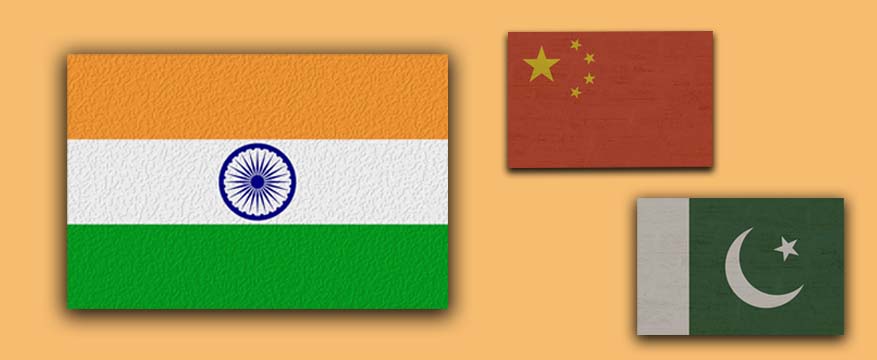
In Smart Diplomacy: Exploring China-India Synergy, P.S. Suryanarayana has sought to answer the questions: ‘Will China and India live at peace with each other? Will they be able to overcome the deficit of trust between them? Will they be able to find amicable solutions to their disputes over their borders, Pakistan, Tibet, rivers, and trade, etc.?’ (p. iv). These questions, raised by Ambassador Tommy Koh in his foreword to the book, concern all those who want a stable and productive future for the two countries that Suryanarayana characterizes as the sunrise powers of the 21st century.
Mass Media in Xi’s China: Markets Versus Control
Xi Jinping became the General Secretary of the Communist Party of China in November 2012 and the President of the People’s Republic of China in March 2013. Ever since, under his leadership as the Chinese President, the Chinese Communist Party (CCP) has been progressively tightening its control over the media. In a Communist structure, the media is perceived to be the ‘mouthpiece’ of the Party and is supposed to be used for propaganda. Media is a very essential tool in spreading the government agenda and controlling the public discourse.
Flimsy Reading of History Fails to Predict Tibet’s Future
Prof P. Stobdan (Senior Fellow, IDSA)’s reading of history fails to predict Tibet’s future from the beginning. The Dalai Lama has informed the Tibetan people about his thinking on the succession issue since as early as 1969. Later on September 24, 2011, the Dalai Lama took a definite position on the succession issue, where the Dalai Lama made it very clear that the decision to continue or not continue with the institution of the Dalai Lama lies with the Tibetan people. The real reason for ‘Younghusband’s visit’ to Tibet was not to lay a telegraph line.
Reconsidering the Paracel Islands Dispute: An International Law Perspective
The Paracel Islands dispute has recently resurfaced as a source of conflict between Vietnam and China, who both claim sovereignty over the islands from ‘time immemorial’. This article re-examines their respective claims from an international law perspective. It also focuses on delineating the respective claims with emphasis on sovereignty, territory and self-determination. Based on available sources, this article suggests that Vietnam appears to have a more credible sovereignty claim over the Paracel Islands vis-à-vis China.
Can Taiwan Talk ‘Political’ with the Mainland?
An investigation into the prospects for including political talks in the cross-strait dialogue enables a better assessment of cross-strait relations. China’s push for political talks and Taiwan’s resistance to them imply that their political positions on the fundamental issues of sovereignty and ‘living space’ for Taiwan remain unchanged. Considering Taiwan’s complex domestic political scenario, which is largely against unification with Mainland China, the likelihood of Taiwan agreeing to political talks for unification is remote.
An Assessment of the Chinese Dream: 2015
In November 2012, soon after the conclusion of the 18th National Congress of the Communist Party of China (CPC), President Xi Jinping put forward for the first time the idea of the ‘Chinese Dream’. In March 2013, Xi further elaborated on this concept at the closing ceremony of the First Session of the 12th National People’s Congress.
Future of India–China Boundary: Leadership Holds the Key?
Will India and China resolve their boundary dispute during the tenure of Narendra Modi and Xi Jinping? The strategic communities in both countries are optimistic, particularly after the high tension prevailing along the border during President Xi Jinping’s tour of India in September 2014. Both Prime Minister Modi and President Xi are seen as decisive leaders.1 Both are expected to hold power in their respective countries for a few years to come. Personalities and personas matter greatly for scoring political brownie points. The boundary dispute, quintessentially, is political in nature.