The Dragon has landed for the American Eagle
Sino-US rivalry has been simmering for the past many years, as China has replaced Russia in the American scheme of things as its most potent adversary.
- Rajeev Sharma
- October 13, 2010
The Centre brings out five monthly newsletters: East Asia Military Monitor, Japan Digest, China Science and Technology, Korea Newsletter, and China Military Digest.
No posts of Books and Monograph.
No posts of Jounral.

Sino-US rivalry has been simmering for the past many years, as China has replaced Russia in the American scheme of things as its most potent adversary.
The power transition in North Korea is bound to produce more political intrigue in the coming months, with the junior Kim concentrating more on military modernization and nuclear programme to strengthen his position.
If the China-Japan maritime dispute in the East China Sea is not tackled and left to linger, it would have a serious impact on regional security.
China’s rise has become a matter of concern throughout Asia and led to changes in the strategic postures of its neighbours. Japan has begun to rethink its own defence strategy and security policy in response to China’s military modernization.
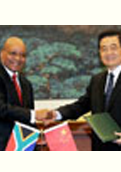
South African President Jacob Zuma has affirmed the mutually beneficial economic relationship between China and Africa, including with his country, notwithstanding the negative sides to this relationship. It is clear that China’s role in Africa is changing the terms of engagement with the region. That is perhaps the biggest challenge for India and the rest of the world in their future Africa strategy.
Converging interests between India and South Korea is leading them to position themselves to work closely in the emerging Asian security architecture.
Indian decision makers played down the problems in the India-China relationship for the past decade in the expectation that deepening engagement would influence attitudes at the top level in China and thereby enable hardened positions to soften.
The various diplomatic rows and even the border problem are symptoms of the larger problems that exist between India and China – the competition for status, influence and power.
Even though the report is fairly cautious in what it says and does not highlight anything new, the reactions on the Chinese side have not been that positive.
Many Papuans prefer to internationalise their plight and seek a third party to settle the issue as they do not trust the Jakarta elites and Indonesians in general.