The BRI and India’s Grand Strategy
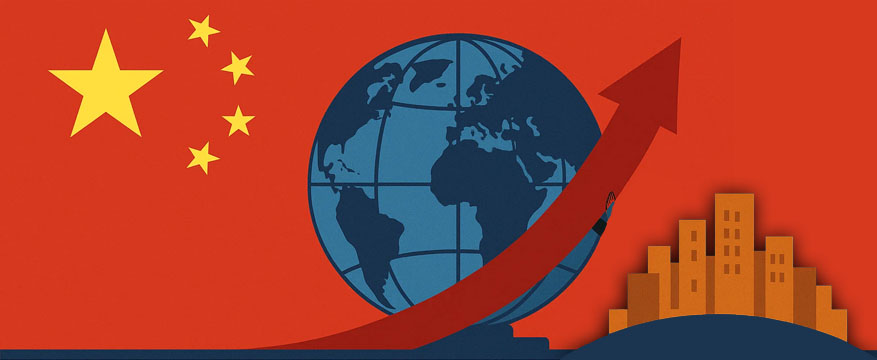
India’s rejection of the BRI for strategic reasons does not mean it is resistant to Chinese investments, which are—to the contrary—both welcome and rapidly increasing. Indian strategy in this respect is in accord with the changing character of the international system, where strategic competition co-exists with economic cooperation as well as competition. In contemporary international politics, structurally driven conflictive behaviour is modified by high levels of strategic and economic interdependence.
The BRI and India’s Neighbourhood
Chinese President Xi Jinping initially proposed to build an ‘economic belt’ and a ‘21st-century Maritime Silk Road’ in 2013 which were formalised as the ‘Belt and Road Initiative’ (BRI) in a document—‘Vision and Actions on Jointly Building Silk Road Economic Belt and 21st-century Maritime Silk Road’—released by the National Reform and Development Commission in 2015.
Know Thy Neighbour: Growth of India and China—Socio-Cultural Precepts and Propositions*
It is very important for large and populous neighbours such as India and China to have a better understanding of one another’s history, culture and value systems. Perhaps no two peoples in the world are as similar as Indians and Chinese in terms of the agrarian foundations of our societies and many of our traditions with roots in Hindu-Buddhist rituals and philosophy, and even the undue importance attached in the past to the male child.
The Rise of Kim Yo-Jong in the North Korean Regime
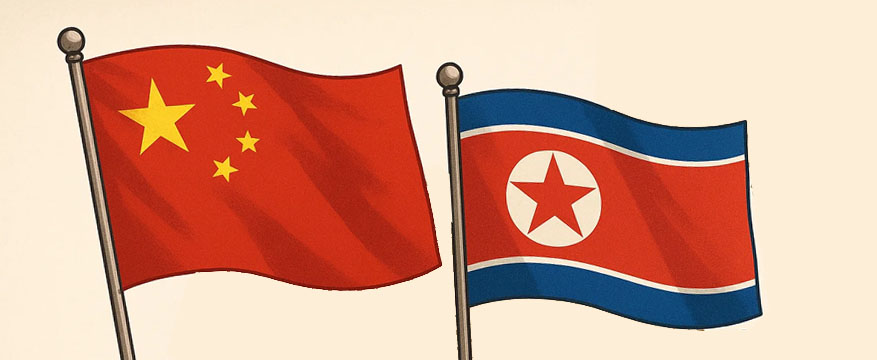
The state narrative of North Korea, the story that keeps the Kims in power and the population uncomplaining, is built as much around international politics as it is domestic. In the mid-1990s, soon after the first transition of power from Kim Il-sung to Kim Jong-il, the country and the regime was in crisis. Always looking at themselves through the lens of South Korea and the need for reunification, official propaganda had been building an idea that their Southern brothers and sisters were impoverished in comparison and desperate to join with the North once again.
Xi Jinping’s Control of the Chinese Army
Since taking over power in 2012, the Chinese President Xi Jinping’s key initiative has been to make the Communist Party of China (CPC) relevant in the function of China’s political system. However, when Xi Jinping argues for a ‘unified and absolute leadership of the Party, it has become co-terminous with his absolute control of the Party. What does this centralisation of power signify? Given this context, it is imperative to question under whose control is the Chinese Army. That is, does CPC as an organisation hold absolute command over the PLA or it is Xi Jinping who controls it?
India’s ‘Act East’ Policy Towards the Two Koreas: Issues and Challenges
The Narendra Modi government after coming to power in May 2014 initiated the ‘Act East’ policy to further enhance New Delhi’s engagement with the countries of the Asia-Pacific region. However, India’s engagement with the two Koreas has not seen any significant improvement under the Modi government. North Korea’s isolationist policies and its involvement with India’s neighbouring countries with regard to the proliferation of nuclear and missile technologies have proved detrimental for relations between New Delhi and Pyongyang.
Look/Act East Policy, Roads and Market Infrastructure in North-East India
The socio-politico-economic scene in India’s North-east region has guided certain aspects of the country’s domestic and international policy. The Act East Policy (AEP) of the government of India aims to build relations with the countries of South-East Asia, including trade relations, for which the north-east serves as the gateway. This article seeks to analyse the relevance of the policy: How is it grounded in the complex region of north-east India? In what way can it impact the region?
China’s contingencies and globalisation
China’s Contingencies and Globalisation was initially published as a special issue of the Third World Quarterly and consisted of papers presented at the Seventh Annual Global Studies Conference at Shanghai University, in June 2015. The current volume has three sections. The first four chapters of the book focus on impact of globalisation on China; the second section consisting of three chapters examines the economic transformation of China after the opening up; while the last four papers concentrate on the broader themes of the changing society, religion and culture in China.
Analysing China’s soft power strategy and comparative Indian initiatives
Soft power has become a new currency of power in international relations. It assumes more significance with countries that are sovereign equals but vulnerable to dominance and hegemonic actions by powerful states in international system. Especially in countries that are extremely sovereignty-sensitive, actions through soft power becomes more acceptable as a means of intervention whether it is economic or cultural investment Of dominant powers. American soft power is much more about the attractiveness of America as a liberal democracy.