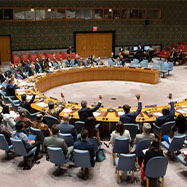
Resolution 2728, adopted by the United Nations Security Council on 25 March 2024 carries political implications beyond its text, particularly due to the US decision to abstain.
Deepika Saraswat replies: In March 2022, Iran and the five permanent members of the UN Security Council plus Germany (P5+1) agreed on the broad outline to revive the Iran nuclear deal, formally called the Joint Comprehensive Plan of Action (JCPOA). However, talks were stalled as a result of a last minute demand by Russia for written guarantees from Washington that the sanctions imposed on it over the Ukraine crisis will not harm its economic and military-technical cooperation with Iran.
The special meeting of the United Nations Security Council (UNSC) Counter-Terrorism Committee (CTC) held in New Delhi is an important multi-lateral effort to counter malicious use of technology.
Established in 1978 with the objective of ensuring Israeli withdrawal from South Lebanon, the United Nations Interim Force in Lebanon (UNIFIL) has been a key factor in maintaining stability along the Blue Line between Israel and Lebanon since then. There are divergent views on the achievements of the mission after more than four decades of its deployment.
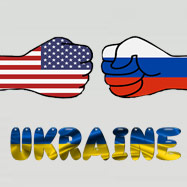
Rajeesh Kumar replies: For India, the Ukraine crisis is a challenging foreign policy issue. Moscow and Washington are New Delhi's key strategic partners, and abandoning one is not sensible. Though ties between Washington and New Delhi have grown significantly in recent years, New Delhi still maintains a special and privileged friendship with Moscow. Therefore, at the United Nations (UN), India's response to the Ukraine crisis was cautious.
Ukraine’s security predicament in the face of the Russian military onslaught brings into focus the vacuity of big power security assurances in the absence of legally binding security guarantees and treaty commitments.
Indian interventions on the subject of peacekeeping is a testimony to its abiding interest not only in the workings of the peacekeeping mechanism but also in the global governance of peacekeeping.
As the emerging Cold War theatrics and veto politics threaten to further paralyse the functioning of UNSC, the Ukraine crisis is unlikely to abate any time soon.





Can the Security Council Help Bring Peace to Gaza?
Resolution 2728, adopted by the United Nations Security Council on 25 March 2024 carries political implications beyond its text, particularly due to the US decision to abstain.