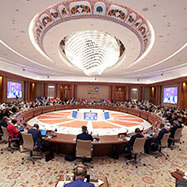
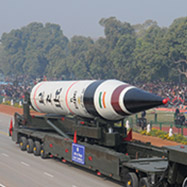
India’s admission to the NSG has, as on the previous times when the India-US Nuclear Deal and the NSG exemption of 2008 were under discussion, caused many of those opposed to the Indian nuclear programme to come out with various policy suggestions on how to get India to agree on additional conditionalities. In addition there is a move by many to use the Indian admission for membership as a means to legitimize the illegitimate nuclear commerce between China and Pakistan. All these are predicated on the assumption that India is desperate to join the NSG. India should reject any move by the nonproliferation lobby to devise a criterion-based admission procedure.
In the aftermath of recent North Korean actions and threats, there has been in recent times some open debates and discussions about the prospects of South Korea “going nuclear” i.e. developing its own nuclear weapons. This brief argues that short of abrogating all its bilateral and multilateral treaties and obligations with heavy costs, the prospects of it doing so in the short/medium term are not that easy and may not be cost effective.
There is a lot of inaccuracy and assumption in reporting Chasma 3 nuclear cooperation between China-Pakistan. It is not conceivable in engineering terms as to how a 300 MWe Chasma 3 can be transformed into a 1,000 MWe project.
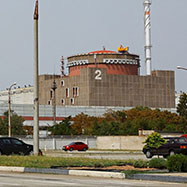
China and Pakistan reached a formal agreement in February 2013 to construct a third nuclear reactor in Chashma. This has caused widespread nervousness while making the NSG look weak-kneed.
Nuclear force development is at present an attractive means for Pakistan to attract international political and financial assistance, while salving the paranoias of its security establishment. Improvement in the state-society relationship could reduce the domestic appeal of endless nuclear expansion as other, more sustainable, resources become available to the state for building economic growth and security.
The second Chinese BMD test has a message for India: propel the development of long-range (exo-atmospheric) interception capabilities to mitigate the possibility of further asymmetry on strategic forces.
Although PNEs were surrounded by ambiguity of intent from the very onset, retroactive measures after May 1974 have ensured that an underground nuclear test could be ‘peaceful’ only when conducted by or with the assistance of the superpowers.
The phenomenon of nuclear terrorism has been the subject of intense debate as also much hype.
US efforts to improve and expand its BMD system would degrade Chinese nuclear retaliatory capability thus forcing China to go for a qualitative and quantitative improvement of its nuclear force by deploying more ballistic missiles with MIRV and MARV capability and penetration aids.
The Right of Recourse embedded in the Indian nuclear liability law has ensured that more than four years after the NSG granted exemption to enable nuclear commerce with India, India has not been able to finalise a single contract with any of the countries with which it has signed nuclear cooperation agreements for any nuclear facility.