The GCC’s ‘Vision for Regional Security’ is a conscious move on the part of the GCC to reaffirm its cohesion at the time of fast-evolving regional crises.
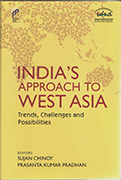
This volume provides perspectives of scholars from India and West Asia on several bilateral issues of concern, challenges and scope for further cooperation. The authors contend that a convergence of interests between India and West Asian countries across numerous domains, coupled with India`s escalating stakes in the region, and the growing recognition among West Asian nations of India`s burgeoning economic and political influence, stand as key drivers underpinning the India-West Asia relationship. Furthermore, they have underscored that under the leadership of Prime Minister Narendra Modi, India’s West Asia policy has undergone a major transformation.
The Arab unrest had a severe impact on the GCC, as it uncovered the existing internal fissures and limitations of the organization. Despite their success in integrating themselves on vital economic, security and political issues, divergent policies adopted by the individual member states on a number of regional issues in the aftermath of the Arab unrest was the main reason for the widening cracks within the organization.
The end of the ceasefire in Yemen without any substantial political understanding between the government and the Houthis heightens the risk of escalation of violence.
Established in 1978 with the objective of ensuring Israeli withdrawal from South Lebanon, the United Nations Interim Force in Lebanon (UNIFIL) has been a key factor in maintaining stability along the Blue Line between Israel and Lebanon since then. There are divergent views on the achievements of the mission after more than four decades of its deployment.
The recent Houthi attacks on the UAE have widened the ambit of the ongoing war in Yemen, and are likely to prolong the instability in and around Yemen and hinder the regional and international efforts towards establishing peace in the country.









GCC’s ‘Vision for Regional Security’
The GCC’s ‘Vision for Regional Security’ is a conscious move on the part of the GCC to reaffirm its cohesion at the time of fast-evolving regional crises.