The controversy regarding President Vladimir Putin’s participation in the BRICS Summit at Johannesburg due to an arrest warrant by the International Criminal Court highlights the geopolitical overtones and inadequacies of the ICC in the contemporary world.
The African notifications of intention to quit ICC have yet again highlighted the need for systemic changes in the current world order. Only a non-discriminatory, democratic and inclusive UNSC reflecting the contemporary world could address these challenges and questions.
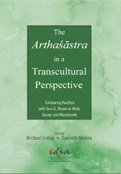
This book is the product of a collaborative effort by the Institute for Defence Studies and Analyses, New Delhi; South Asia Institute, Heidelberg University; and Institute of South Asian Studies, National University Singapore. The volume contains papers exploring Kautilya’s Arthasastra in a transcultural perspective, comparing it with the thoughts of Sun-Zi, Nizam al-Mulk, Barani and Machiavelli.
There is a collective international effort to bring about stability, but its history with its neighbours and divisions within may haunt Somalia's future.
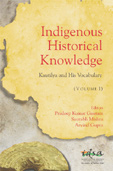
This book is the third in a series of three volumes on "Kautilya and His Vocabulary" as a part of the "Indigenous Historical Knowledge" project undertaken by the Institute for Defence Studies and Analyses (IDSA), New Delhi. The edited volumes contain select papers presented in a series of workshops, national and international seminars organised by the Institute. The project is an attempt to trace, look into, analyse and relate with the indigenous strategic thinking in India. These volumes aim at initiating the study, internalisation, spread and consolidation of Kautilya's Arthashastra in the strategic domain. The four focus themes in the three volumes are foreign policy, intelligence, war and internal security as they relate to contemporary times.
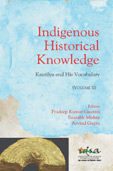
This book is the second in a series of three volumes on “Kautilya and His Vocabulary” as a part of the “Indigenous Historical Knowledge” project undertaken by the Institute for Defence Studies and Analyses (IDSA), New Delhi. These volumes aim at initiating the study, internalisation, spread and consolidation of Kautilya's Arthashastra in the strategic domain. The four focus themes in the three volumes are foreign policy, intelligence, war and internal security as they relate to contemporary times.
The protracted sectarian conflict in Syria has brought focus on its chemical and biological weapons capability. The West contemplated that the Bashar al-Assad regime in Syria might use chemical weapons to gain an upper hand on the rebels in case the conventional strength was weakened.
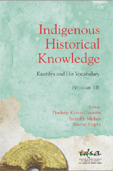
This book is the first in a series of three volumes on “Kautilya and His Vocabulary” as a part of the “Indigenous Historical Knowledge” project undertaken by the Institute for Defence Studies and Analyses (IDSA), New Delhi. The edited volumes contain select papers presented in a series of workshop, national and international seminars organised by the institute. The project is an attempt to trace, look into, analyse and relate with the indigenous strategic thinking in India. These volumes aim at initiating the study, internalisation, spread and consolidation of Kautilya’s Arthashastra in the strategic domain. The four focus themes in the three volumes are foreign policy, intelligence, war and internal security as they relate to contemporary times.
The emergence of the AU as a player in maintenance of peace and security should
not mean prioritising regionalism over the true spirit of internationalism that the
UN ought to represent. This may need a reform or two on both sides.


BRICS Summit and ICC Warrant against Putin
The controversy regarding President Vladimir Putin’s participation in the BRICS Summit at Johannesburg due to an arrest warrant by the International Criminal Court highlights the geopolitical overtones and inadequacies of the ICC in the contemporary world.